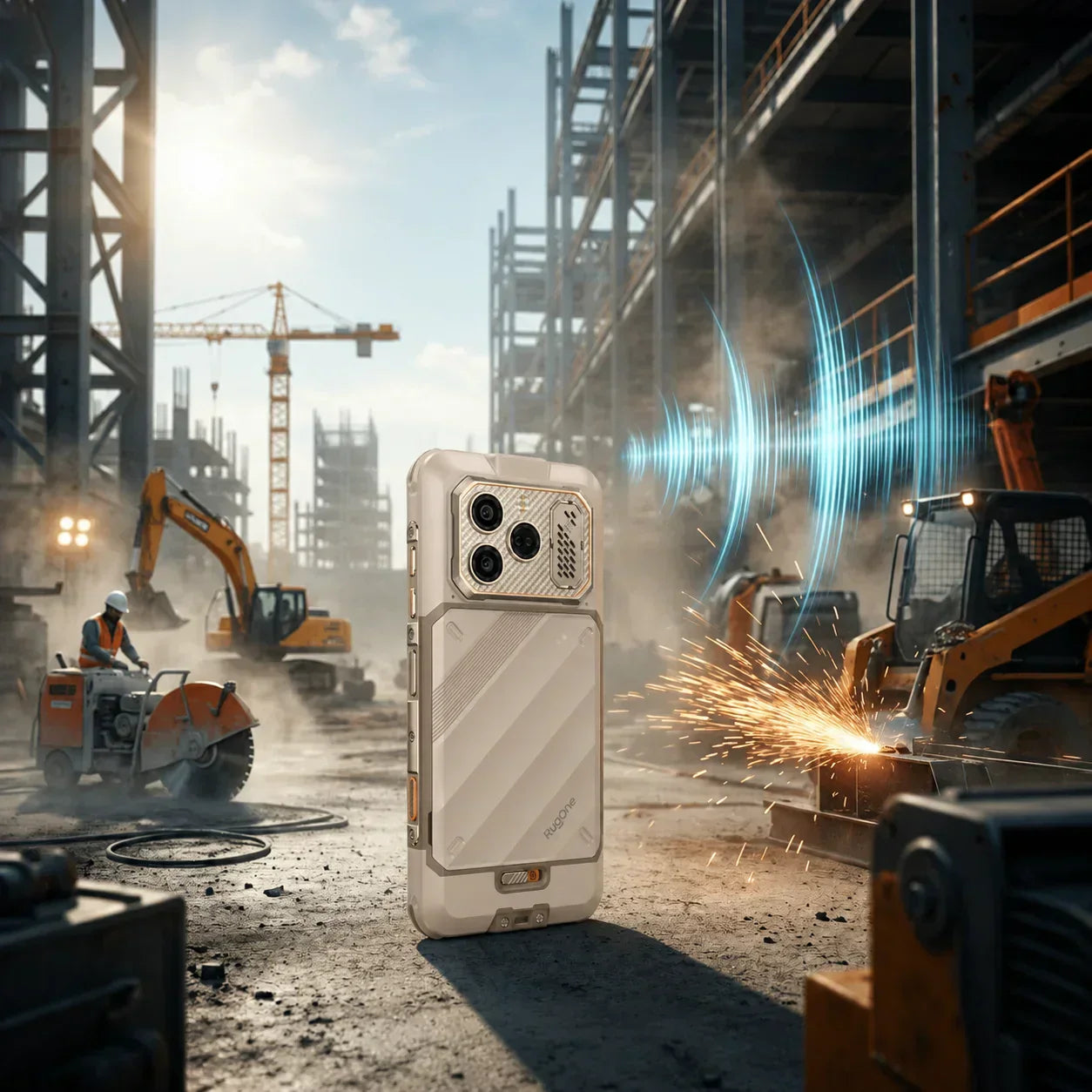
 Xever 8
 Xever 7 Pro
 Xever 7
 Xlink 7
 Charging Station (Xever 8 Series)
 Charging Station (Xever 7 Series)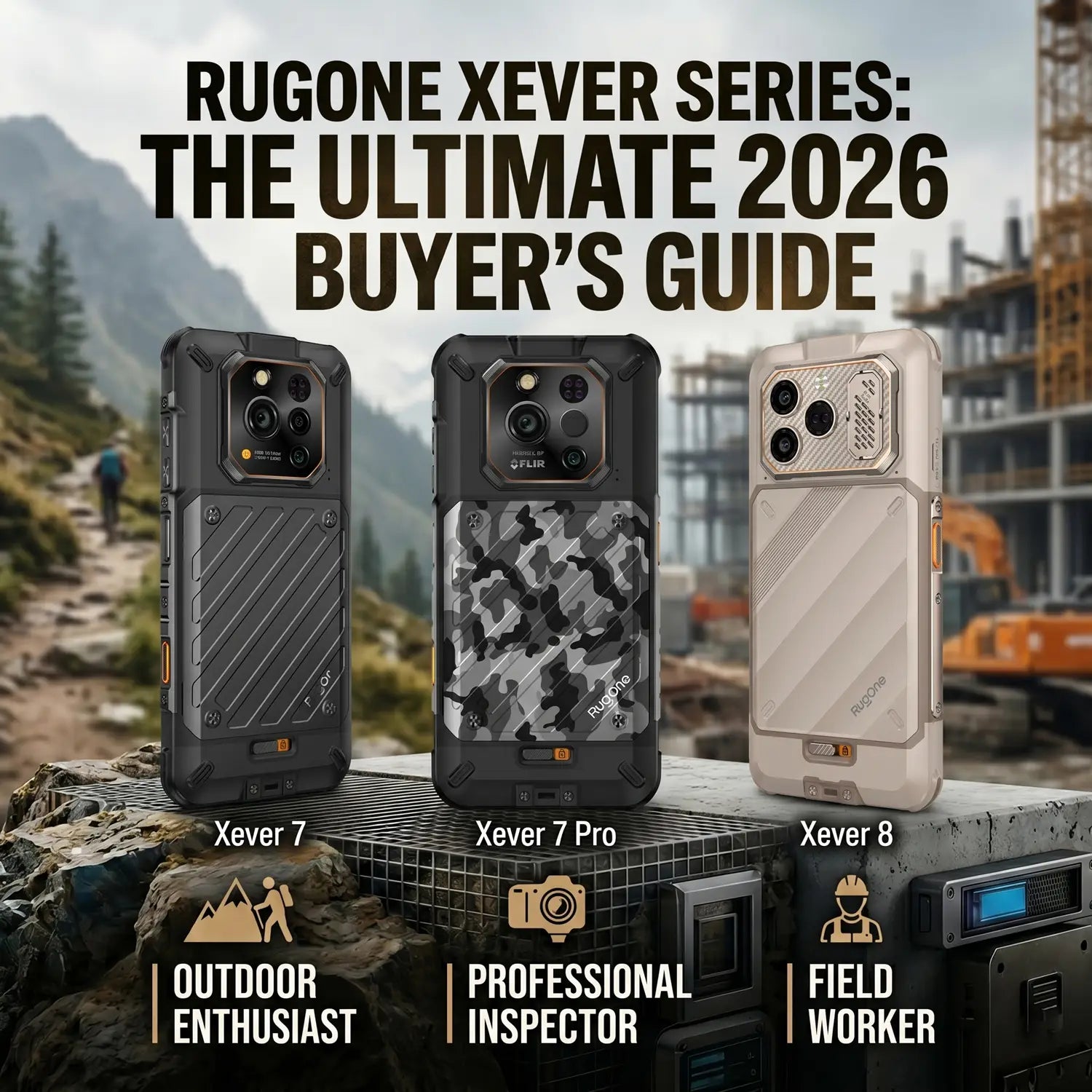
Xever 7 vs Xever 7 Pro vs Xever 8: Which RugOne Phone Should You Buy in 2026?
RugOne makes three rugged phones right now. All three are tough. All three have swappable batteries. All three run Android with proper software support. So how do you actually choose between them?
The short answer: each model targets a different buyer. The Xever 8 is for field workers who need zero-downtime power and a capable camera at a practical price point. The Xever 7 is for outdoor enthusiasts who want 5G, a premium camera system, and a large AMOLED display. The Xever 7 Pro is for professionals who need all of that plus a FLIR thermal imaging camera for industrial or inspection work.
But the details matter, so let's go through this properly.
The One Thing All Three Share
Before getting into differences, it's worth naming what every Xever has in common — because this is the foundation that makes RugOne phones worth considering in the first place.
All three carry IP68 and IP69K dual water resistance ratings. IP68 covers submersion up to 2 meters for 30 minutes. IP69K adds high-pressure jet resistance, which matters in industrial environments where equipment gets sprayed down. Most rugged phones carry only IP68. The dual rating across the entire RugOne lineup is a meaningful baseline.
All three are MIL-STD-810H certified, meaning they've been tested to the US military's standard for drops, vibration, temperature extremes, humidity, and altitude. Drop protection is rated to 2 meters across the board.
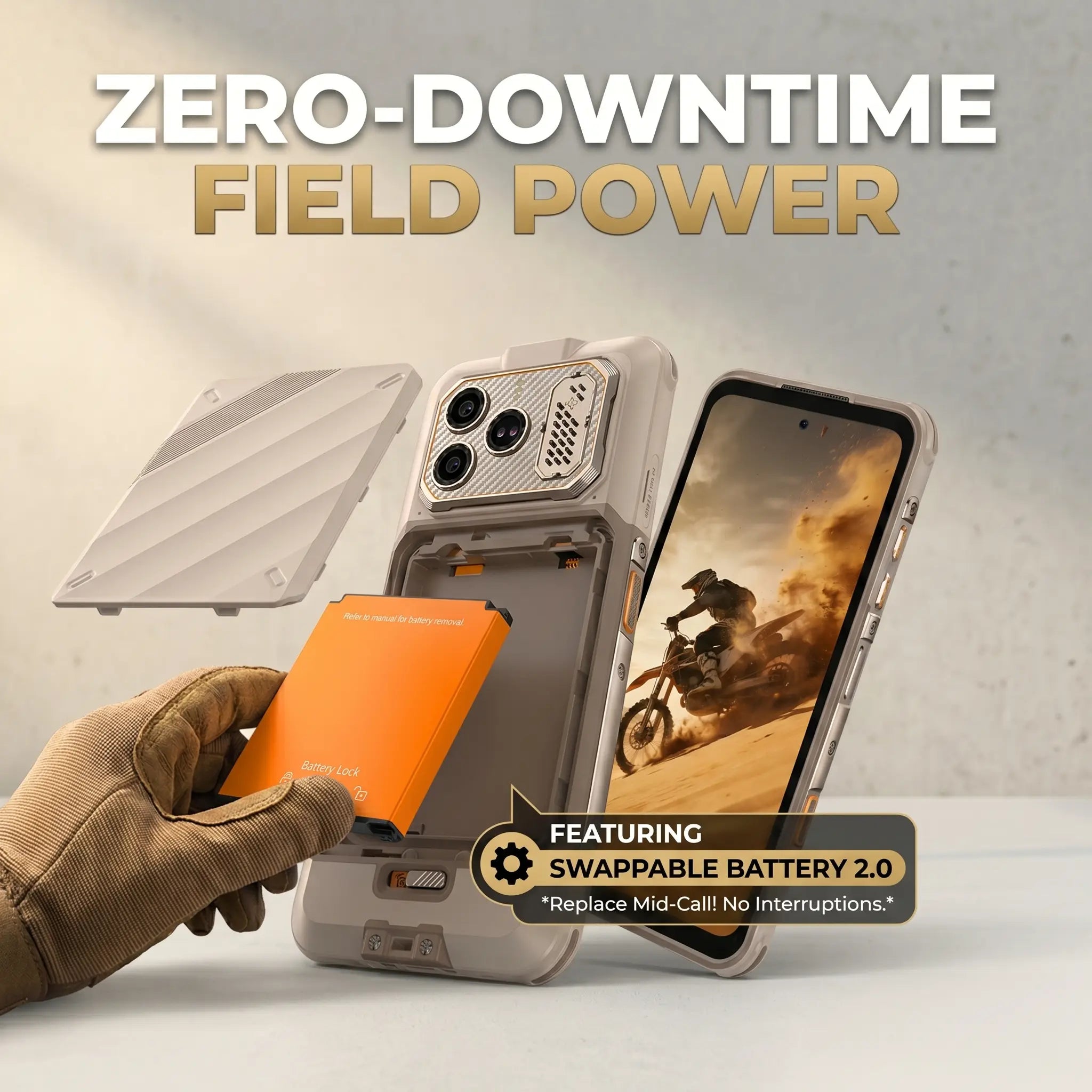
All three come with swappable battery technology — the ability to replace the battery without powering off the phone. They all ship with dual batteries and a 4-in-1 charging station in the box.
And all three run a current version of Android with multi-year major OS update commitments from RugOne.
That's a strong shared foundation. The differences are about what you need on top of that.
Full Specs Comparison
| Spec | Xever 7 | Xever 7 Pro | Xever 8 |
|---|---|---|---|
| Price | $529.99 | $659.99 | $429.99 |
| Display | 6.67" AMOLED 120Hz | 6.67" AMOLED 120Hz | 6.5" IPS LCD 120Hz |
| Chipset | Dimensity 7025, 6nm | Dimensity 7025, 6nm | Helio G200, 6nm |
| RAM / Storage | 12GB / 512GB | 12GB / 512GB | 8GB / 128–256GB |
| Battery | 5,550mAh swappable | 5,550mAh swappable | 4,800mAh Swappable 2.0 |
| Battery swap behavior | Brief app pause | Brief app pause | Zero interruption (mid-call capable) |
| Main camera | 50MP OIS AI | 50MP OIS AI | 64MP Sony IMX682 |
| Ultra-wide camera | 50MP (117.3°) | — | — |
| Night vision camera | 64MP + 4 IR lights | 64MP + 4 IR lights | 20MP + IR sensors |
| Thermal camera | — | FLIR Lepton 3.5 | — |
| Front camera | 32MP | 32MP | 32MP |
| Flashlight | 230-lumen TorchX | 230-lumen TorchX | 230-lumen TorchX |
| Network | 5G + eSIM | 5G + eSIM | 4G + eSIM |
| Weight | 325g | 325g | 320g |
| Android version | Android 15 → 18 | Android 15 → 18 | Android 16 → 19 |
| Waterproof rating | IP68 / IP69K | IP68 / IP69K | IP68 / IP69K |
| Drop protection | MIL-STD-810H, 2m | MIL-STD-810H, 2m | MIL-STD-810H, 2m |
| Screen protection | Gorilla Glass | Gorilla Glass | Gorilla Glass 3 |
The Key Differences That Actually Matter
Battery: Swappable vs. Swappable 2.0
All three phones let you swap the battery without turning the phone off. But the Xever 8 takes this further.
On the Xever 7 and 7 Pro, swapping the battery triggers a brief power-saving mode that pauses running apps. Background data stays intact, and no restart is needed — but if you're mid-call or actively navigating, there's a moment of interruption.
The Xever 8's Swappable Battery 2.0 system eliminates that interruption entirely. You can be in the middle of a phone call, pull out the dead battery, insert a fresh one, and the call continues without the other person noticing. GPS stays live. Apps stay active. Nothing pauses.
For casual outdoor users, the difference is minor. For field workers on active calls or workers who rely on continuous GPS navigation, the Xever 8's approach is genuinely better.
The trade-off: the Xever 7 series has a larger battery per unit (5,550mAh vs 4,800mAh), so each individual charge lasts slightly longer before you need to swap.
Camera: Three Different Philosophies
The camera systems reflect very different priorities across the three phones.
The Xever 7 has the most versatile camera setup for outdoor photography. Its 50MP ultra-wide with a 117.3° field of view and macro capability makes it the best choice for landscape photography, hiking documentation, and adventure content. The 64MP night vision camera with four IR lights handles complete darkness better than the Xever 8's 20MP equivalent.
The Xever 7 Pro swaps the ultra-wide camera for a FLIR Lepton 3.5 thermal imaging sensor. This is a professional tool — it detects heat signatures, which is used in building inspections (finding heat leaks and electrical faults), search and rescue operations, wildlife detection at night, and industrial maintenance. If thermal imaging is relevant to your work, the 7 Pro is in a category of its own.
The Xever 8 focuses on photo quality over versatility, using a 64MP Sony IMX682 sensor for its main camera — a higher-grade sensor than the 7 series' main cameras. Daylight photos will be sharper and more detailed on the Xever 8. But you lose the ultra-wide and the thermal, and the night vision camera is less powerful.
Display: AMOLED vs. IPS LCD
The Xever 7 and 7 Pro use 6.67-inch AMOLED screens. AMOLED offers deeper blacks, higher contrast, and more vivid colors than LCD. If you consume a lot of media on your phone — watching videos, streaming, gaming — the AMOLED display makes a real difference in the experience.
The Xever 8 uses a 6.5-inch IPS LCD at the same 120Hz refresh rate. It's a capable display for navigation, communication, and everyday use, but it won't have the same visual depth as the AMOLED panels on the 7 series.
5G vs. 4G
The Xever 7 and 7 Pro support 5G. The Xever 8 is a 4G device.
In practice, this matters less than it sounds for many field workers. Construction sites, rural delivery routes, and remote outdoor areas often have stronger and more reliable 4G coverage than 5G. But if you're in an urban environment where 5G is consistently available, or if your work involves transferring large files wirelessly, the 5G capability of the Xever 7 series is a genuine advantage.
Software: Android 16 vs. Android 15
The Xever 8 ships with Android 16, the latest version, and will receive updates through Android 19. The Xever 7 series ships with Android 15 and will receive updates through Android 18. The Xever 8 has a one-generation advantage in both current software and long-term update support.
Who Should Buy Each Phone
Buy the Xever 8 if:
You're a field worker — construction, logistics, utilities, facilities management — where battery continuity is your single most important requirement. You need the phone to work through a full shift without any dead zones, and you can't afford even a brief call interruption when swapping batteries. The Sony IMX682 camera means your job site documentation and incident photos will be excellent quality. At a lower price point than the Xever 7 series, it's also the practical choice for companies outfitting multiple workers.
You also care about having the latest software — Android 16 out of the box and the longest update runway of any RugOne phone currently available.
Buy the Xever 7 if:
You're an outdoor enthusiast, adventure traveler, or content creator who wants a truly capable camera system alongside rugged durability. The 50MP ultra-wide with macro capability, combined with the 64MP night vision camera, gives you a photography toolkit that most rugged phones can't match. The 6.67" AMOLED screen makes media consumption genuinely enjoyable. The 5G connectivity means fast data wherever coverage exists.
This is also the right choice if you simply want the best all-around RugOne phone for everyday use — more storage (512GB), more RAM (12GB), a bigger battery per charge, and a premium display.
Buy the Xever 7 Pro if:
You work in an industry where thermal imaging has practical value — building inspection, electrical work, HVAC, search and rescue, industrial maintenance, or wildlife monitoring. The FLIR Lepton 3.5 sensor is a professional-grade tool that turns the phone into something no other rugged phone offers. If you currently carry a separate thermal camera for work, the Xever 7 Pro can replace it.
The Xever 7 Pro is also the best choice if you want the Xever 7's full feature set — 5G, AMOLED, 12GB/512GB — with the added thermal capability. You're paying for a genuinely specialized tool.
Quick Decision Guide
I need the battery to never interrupt my work calls or GPS → Xever 8
I want the best camera for outdoor photography → Xever 7
I need thermal imaging for inspections or professional work → Xever 7 Pro
I want the most storage and RAM for the money → Xever 7
I'm buying phones for a team of field workers → Xever 8
I want the latest Android software and longest update support → Xever 8
I need 5G connectivity → Xever 7 or Xever 7 Pro
The Verdict
There's no wrong answer among these three phones — they share the same rugged foundation and the same core swappable battery philosophy. The difference is what you need on top.
For most outdoor workers and blue-collar professionals, the Xever 8 will be the right choice. Swappable Battery 2.0 is a genuinely new capability, the camera is excellent, and it ships with the latest Android software.
For outdoor enthusiasts and everyday adventurers who want a premium photography experience and a stunning display, the Xever 7 hits a strong balance of features and value.
For professionals who need thermal imaging built into their rugged device, the Xever 7 Pro is in a category of its own.
All three are available now. If you're still not sure which one fits your situation, the comparison table above is the fastest way to decide.
View the Xever 8 → View the Xever 7 → View the Xever 7 Pro →
Related reading: