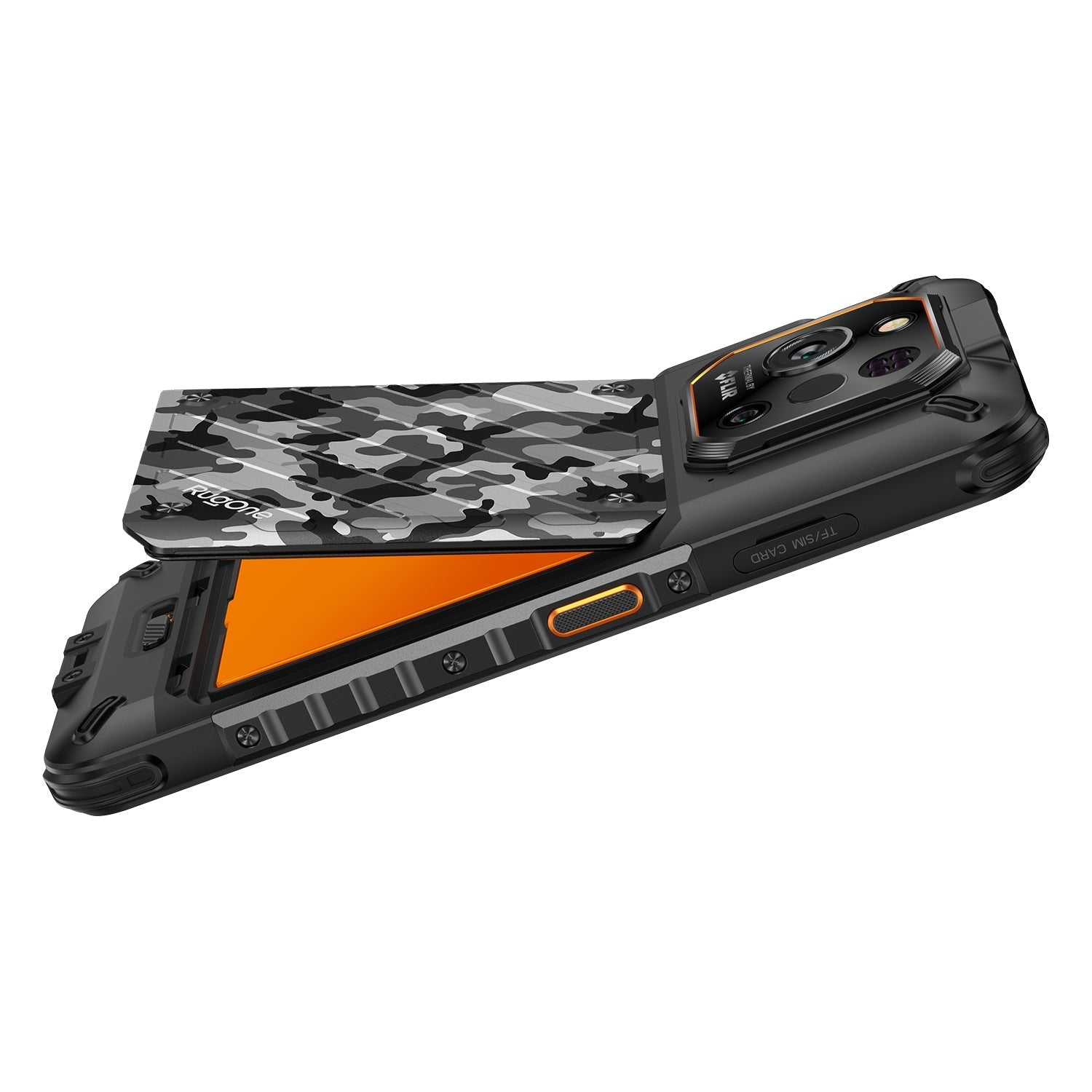


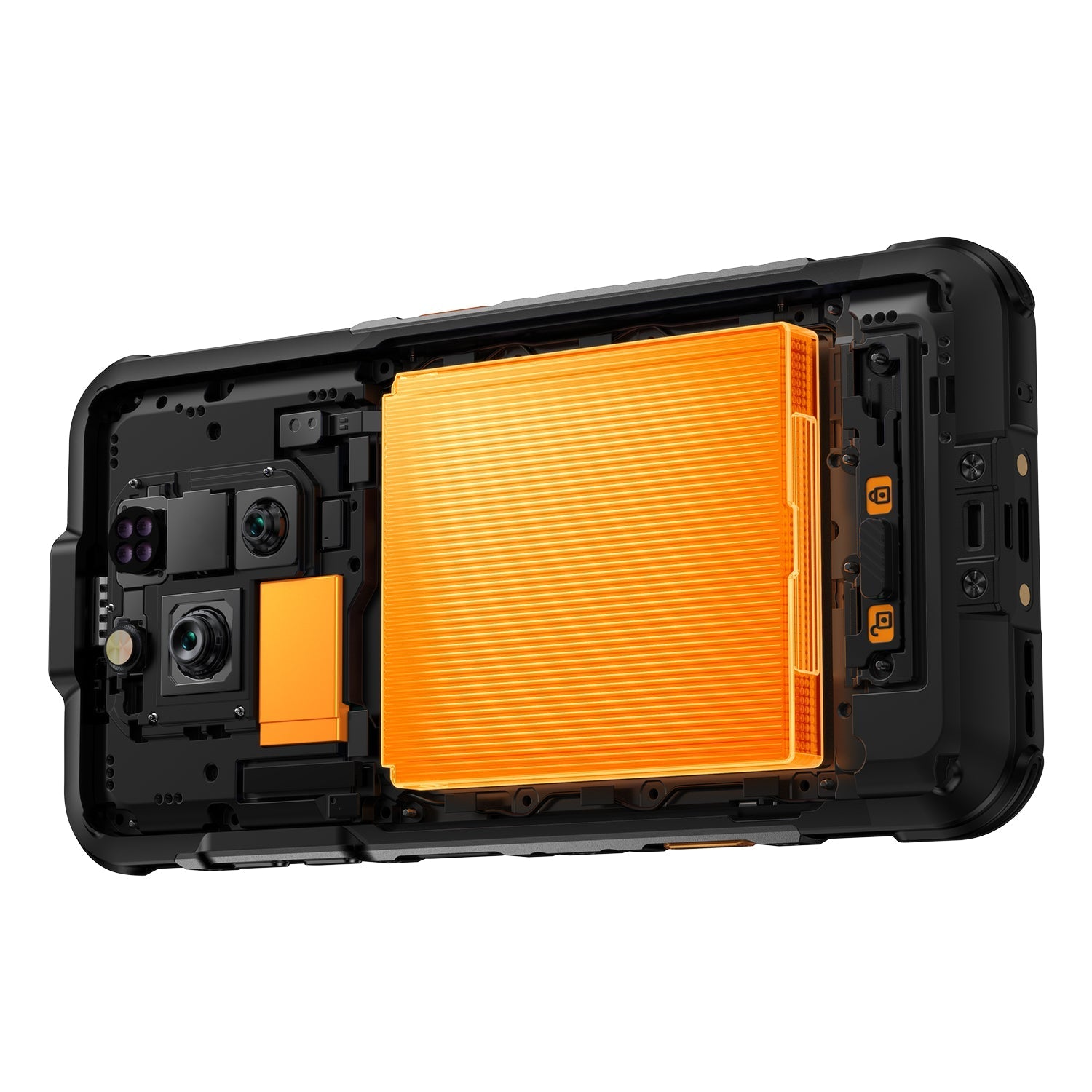
In industrial mobile devices, hot-swappable power systems are commonly implemented using an internal buffer battery or supercapacitor.
What Is a Hot-Swappable Battery Phone?
In the context of rugged mobile computing, a hot-swappable battery phone is a device capable of maintaining system operations and network connectivity while its primary power source is removed and replaced.
Unlike consumer electronics where "removable" simply means the user can physically access the battery, "hot-swappable" refers to a specific electrical architecture. It allows the Operating System (OS) to remain active—avoiding a complete shutdown (Cold Boot)—during the physical exchange of the energy cell.
The Engineering Principles: How It Works
Achieving a "zero-downtime" swap requires a sophisticated interplay between hardware and software. It is not merely about having two batteries; it is about how the device manages the Power Path.
1. The Bridge Battery (Buffer Cell)
The core component is a secondary, internal energy storage unit, often referred to as a "bridge battery" or "supercapacitor" in industrial handhelds.
-
Function: When the external battery latch is released, the Power Management Integrated Circuit (PMIC) detects a voltage drop on the main rail.
-
Action: The PMIC instantly switches the power source to this internal buffer. This buffer is typically small (enough for 2-5 minutes of runtime) and is not user-accessible.
2. PMIC and State Management
Simultaneously, the software must react. Upon detecting the "battery removal" event, the system typically enters a specific Low-Power State:
-
CPU Throttling: Processor frequency is reduced to minimize power draw.
-
Peripherals Suspended: High-drain components (flashlight, speakers, maximum screen brightness) are disabled.
-
RAM Retention: Crucially, voltage to the RAM (Random Access Memory) is maintained, preserving the current session state, background GPS logs, and 5G/4G connections.
Technical Comparison: Cold Swap vs. Hot Swap
From an operational standpoint, the distinction defines the workflow continuity in the field.
| Technical Metric | Standard Removable Battery (Cold Swap) | Hot-Swappable System (Hot Swap) |
| Power State | Hard Power Off (Circuit Open) | Active / Suspend-to-RAM |
| OS Context | Loss of volatile memory (RAM) | Full Retention of volatile memory |
| Network Session | Disconnected (TCP/IP Reset) | Maintained (Session Alive) |
| GNSS/GPS | Cold Start (Time-to-First-Fix reset) | Hot Start (Lock maintained) |
| Recovery Time | 60–120s (Boot Sequence) | 0s (Instant Resume) |
In practice, hot swap is not about convenience—it is about preserving volatile system state.
Engineering Case Study: The RugOne Implementation
To illustrate how this technology is applied in modern 2026 hardware, we can look at the RugOne Xever 7 Pro as a reference implementation of the hot-swap architecture.
The device utilizes a 5550mAh primary module paired with an internal buffer, designed to address specific field constraints:
-
The 180-Second Window: The internal buffer is engineered to sustain the device for up to 3 minutes. This accounts for the realistic time a user needs to retrieve a spare battery from a pouch, remove the depleted one, and seat the new one.
-
Sealing Integrity: A critical challenge in hot-swap designs is water ingress. Since the battery cover is removed while the phone is "live" and potentially outdoors, the Xever 7 Pro utilizes a dual-cover design. Users are advised to inspect the inner silicone seal for debris during the swap to maintain IP68/IP69K standards.
-
Logic Protection: If the 180-second window is exceeded, the firmware is programmed to execute a "Safe Shutdown" to prevent data corruption, rather than allowing a sudden voltage cutoff.
Why It Matters: The Cost of Interruption
For general users, a reboot is a nuisance. For specialized vertical markets, power interruption equals data loss.
-
Surveying & GIS: High-precision GPS equipment often requires continuous satellite tracking to maintain accuracy. A power cycle forces a "Cold Start," requiring the device to re-download satellite almanac data, which can delay work by minutes in difficult terrain.
-
Emergency Comms: In mission-critical Push-to-Talk (PTT) scenarios over cellular networks, staying logged into the dispatch server is vital. Hot-swapping ensures the device remains authenticated on the network.
-
Continuous Logistics: For warehouse scanning operations, rebooting a device often breaks the secure tunnel (VPN) to the inventory database, requiring manual re-authentication.
FAQ:
Q: Can you change a phone battery without turning it off on any rugged phone?
A: No. Only devices explicitly marketed as having "hot-swap" or "buffer battery" capabilities, like the Xever 7 Pro, support this. Standard rugged phones with removable batteries still require a full shutdown.
Q: What happens if I take longer than 180 seconds to swap?
A: The 180-second window is determined by the capacity of the internal buffer battery. If this time is exceeded, the device will perform a safe shutdown to protect the hardware. However, 3 minutes is typically more than enough time for a standard swap.
Q: Does hot-swapping damage the phone's memory?
A: No. Because the voltage is maintained by the buffer battery, the RAM (Random Access Memory) stays powered. Your open apps are paused and unsaved data remains exactly where you left it.
Q: How do I charge the spare battery?
A: The Xever 7 Pro package includes a 4-in-1 Charging Station. This allows you to charge the spare battery independently while you continue to use the phone, ensuring you always have a full 5550mAh cell ready to go.