

Redefining Endurance: It’s Not Just About Capacity
When evaluating the best battery life rugged phone, most users focus on a single metric: milliamp-hours (mAh). On paper, a 15,000mAh or even 20,000mAh battery appears to guarantee long-lasting performance.
However, in 2026, battery capacity alone is no longer a sufficient benchmark for professional-grade devices.
The more critical factor is power system architecture.
A dual-battery rugged phone is not simply a device with two batteries. It is a power management design that separates energy storage from system continuity, addressing a key limitation of single-cell designs: reliability during power transitions.
This reframes endurance from “how long the battery lasts” to “whether the device ever needs to shut down.”
The Big Battery Trap: Limitations of Single-Cell Designs
Increasing battery size has long been the default solution for improving outdoor phone endurance. While effective for light or occasional use, this approach introduces several constraints for professional and long-duration operations.
Single Point of Failure
A single large battery remains one component. If it degrades, malfunctions, or fully depletes, the device shuts down completely, leaving no fallback power source.
Thermal and Ergonomic Trade-offs
Large-capacity batteries concentrate heat during fast charging, which can accelerate battery aging. In addition, their weight is fixed—users carry the full mass regardless of whether that capacity is needed at a given moment.
Inevitable Downtime
Once depleted, high-capacity batteries require extended charging times. During this period, the device is either tethered to a cable or unavailable for use, creating unavoidable downtime.
For professional users, these limitations affect not just convenience, but operational continuity.
Architecture Over Size: The Role of Dual-Battery Systems
Dual-battery rugged phones approach endurance differently by prioritizing continuous operation rather than maximum single-cell capacity.
This architecture typically consists of:
-
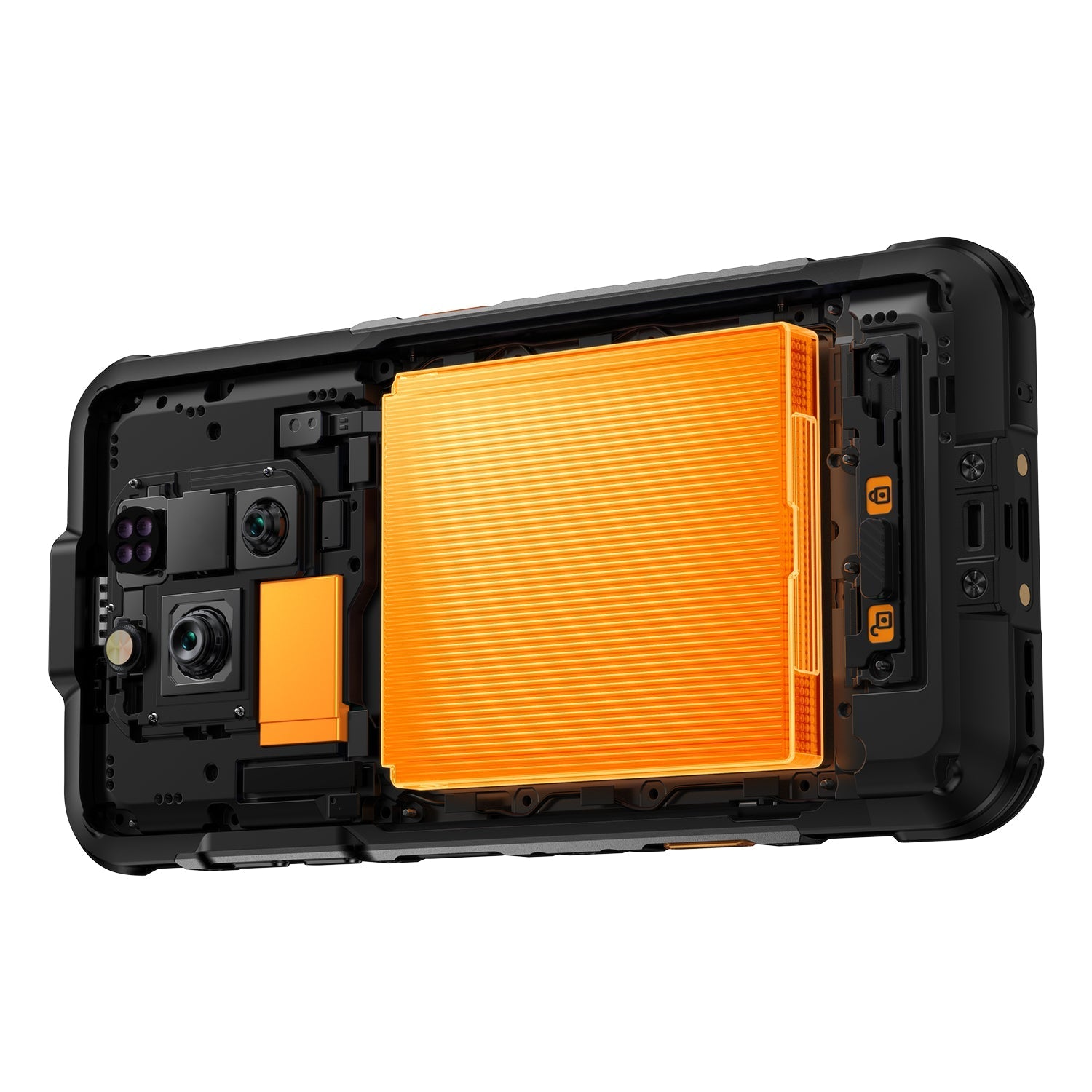
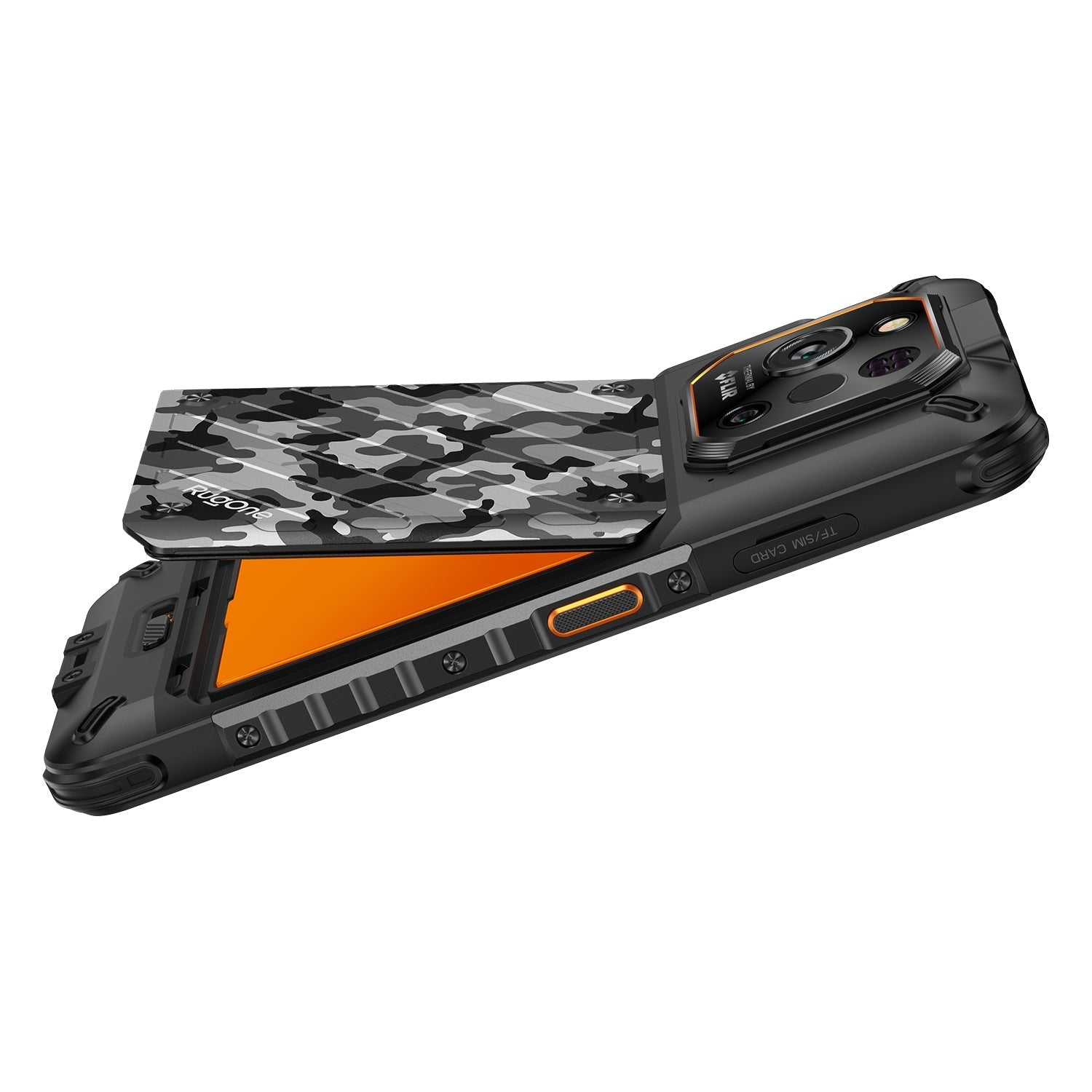
A removable primary battery for regular power supply
-
An internal buffer (bridge) battery that maintains system operation during battery changes
By separating these roles, the device remains powered even when the main battery is removed or replaced.
Key Advantages of Dual-Battery Architecture
-
Operational Redundancy
The buffer battery sustains the operating system, GPS, and communication modules during battery swaps or unexpected power interruptions. -
Improved Thermal Management
Charging smaller batteries—either independently or sequentially—reduces heat concentration and helps preserve long-term battery health. -
Modular Power Strategy
Users can carry multiple spare batteries instead of a single large power bank, distributing weight across gear rather than concentrating it in the device.
Single Large Battery vs. Dual-Battery Architecture
| Feature | Single Large Battery (15,000mAh+) | Dual-Battery Architecture |
|---|---|---|
| Operational Continuity | Device powers off during charging or replacement | Continuous operation |
| Failure Risk | High (single point of failure) | Lower (redundant power path) |
| Weight Flexibility | Fixed and always carried | Modular and adjustable |
| Charging Workflow | Device must be cabled | Batteries can charge externally |
| Device Lifespan | Battery aging limits usability | Replaceable main battery extends life |
| Primary Use Case | Passive or intermittent use | Active, mission-critical use |
Power Management in Field-Oriented Designs
In rugged devices designed for professional use, power management extends beyond hardware.
Modern dual-battery systems rely on intelligent battery management software (BMS) to prioritize the removable battery during normal operation while reserving the internal buffer battery for transition periods. This ensures that system processes continue uninterrupted during battery replacement.
As a result:
-
GPS tracking remains active
-
Communication links stay connected
-
No reboot or data interruption occurs during battery swaps
For extended field operations, this design enables continuous use without reliance on wall charging or extended tethering to power sources.
Who Benefits Most from Dual-Battery Rugged Phones
Dual-battery architecture is particularly suited for users who require uninterrupted device availability:
-
First Responders and Rescue Teams
Continuous communication and navigation without reboot cycles during active missions. -
Field Logistics and Operations Managers
Long shifts involving scanning, tracking, and reporting without docking devices for charging. -
Remote Surveyors and Technical Specialists
Faster battery replacement compared to solar charging and greater reliability in off-grid environments.
FAQ:
Does a removable battery reduce waterproof performance?
No. Properly designed sealing and locking mechanisms allow devices to maintain high ingress protection ratings, such as IP68 or IP69K, when correctly secured.
Why not rely on external power banks instead?
Power banks introduce cables, energy conversion loss, and additional failure points. Dual-battery systems deliver power natively, without interruption or transfer inefficiency.
How does this reduce battery-related anxiety?
Instead of monitoring a single percentage indicator, users manage power modularly. With charged spare batteries available, operational range becomes effectively expandable.
RugOne is an example of a rugged smartphone that applies this architecture in field-oriented, mission-critical use cases.
Key Takeaway for Professional Users
In rugged smartphones, endurance is no longer defined solely by battery capacity.
For mission-critical environments, power architecture, redundancy, and zero-downtime operation have become the true indicators of reliability. Dual-battery systems represent a shift toward designing devices that remain functional not just longer—but continuously—under real-world conditions.