

High-Capacity Battery Smartphones Compared (2026): Which Lasts the Longest?
Battery life has become one of the most critical factors when choosing a smartphone—especially for users who work outdoors, travel frequently, or operate in remote environments.
While most standard smartphones prioritize slim design, many rugged smartphones focus on maximizing battery capacity and reliability. But does a bigger battery always mean longer usage? And how do different battery strategies compare in real-world conditions?
This guide breaks down how high-capacity battery smartphones compare in 2026 and what actually matters for long-lasting performance.
What Is Considered a High-Capacity Smartphone Battery?
Battery capacity is typically measured in mAh (milliampere-hour), which indicates how much charge a battery can store.
In general:
| Battery Capacity | Category |
|---|---|
| 4000–5000 mAh | Standard smartphones |
| 6000–8000 mAh | Above average |
| 10000–13000 mAh | High-capacity |
| 15000 mAh+ | Ultra high-capacity |
Rugged smartphones often fall into the 10000 mAh and above category, making them ideal for extended outdoor use.
Do Bigger Batteries Always Last Longer?
A larger battery does not automatically guarantee longer battery life.
Actual performance depends on multiple factors:
-
processor efficiency
-
display brightness
-
background app usage
-
network connectivity
-
software optimization
For example, a poorly optimized phone with a 10000 mAh battery may perform similarly to a well-optimized device with a smaller battery.
Two Main Battery Strategies in Rugged Smartphones
Modern high-capacity smartphones generally follow two different battery approaches.
1. Large Built-In Battery
This is the most common approach.
Advantages:
-
longer usage on a single charge
-
no need to carry additional components
-
simple user experience
Limitations:
-
long charging times
-
heavier device weight
-
no immediate backup when battery is depleted
2. Removable Battery Systems
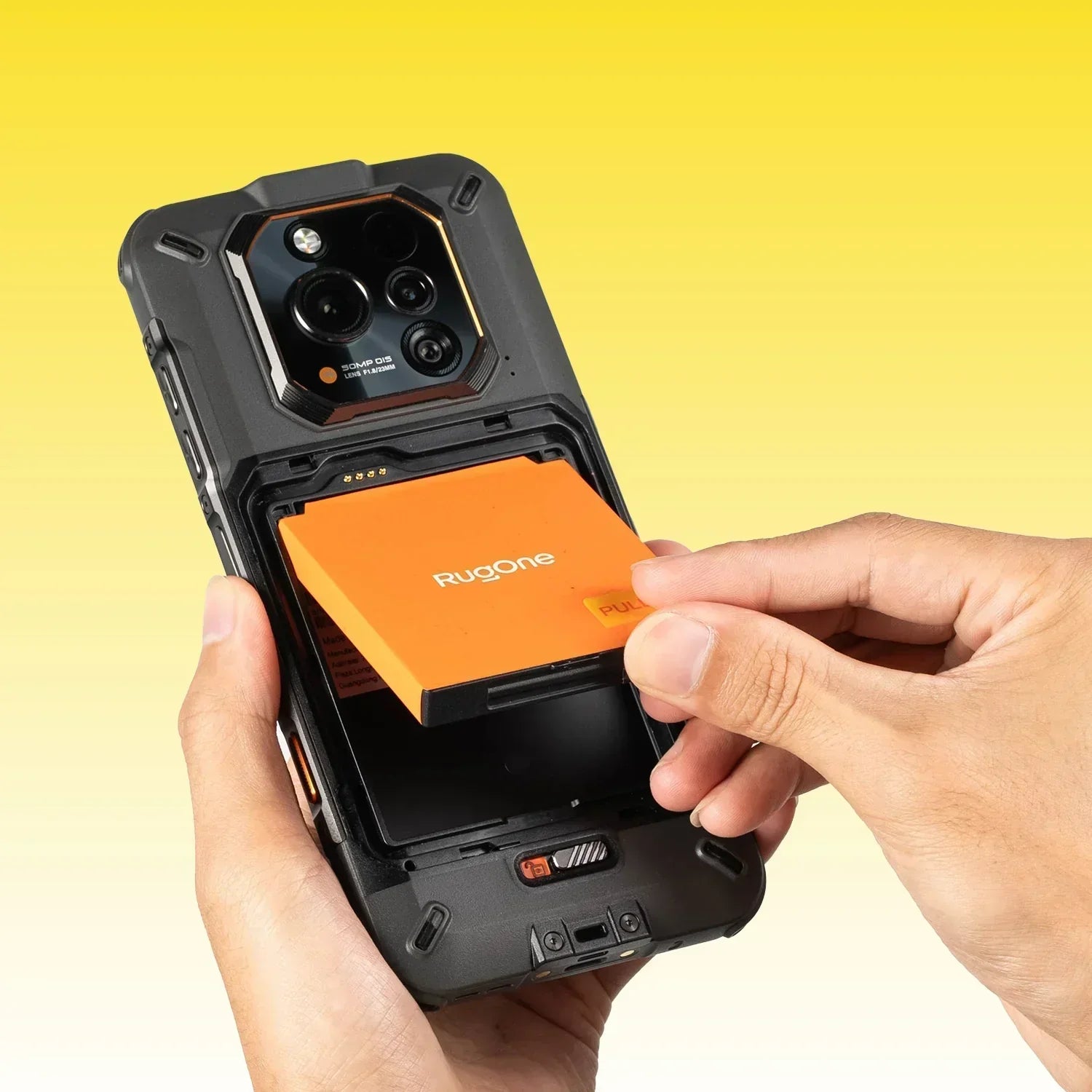
A growing number of rugged smartphones are exploring removable or swappable battery designs.
Advantages:
-
instant battery replacement
-
no downtime waiting for charging
-
ideal for remote or off-grid environments
Limitations:
-
requires carrying spare batteries
-
fewer devices currently support this design
Some modern rugged devices, including newer approaches seen in RugOne designs, emphasize removable battery systems as a practical solution for extended outdoor use where charging is not always possible.
Real-World Battery Performance Comparison
| Scenario | Built-In Battery | Removable Battery |
|---|---|---|
| Daily urban use | Convenient | Less necessary |
| Outdoor hiking | Good | Better (swap anytime) |
| Remote work sites | Limited by charge cycles | Continuous operation |
| Emergency situations | Risk of downtime | Immediate backup power |
For users in extreme environments, removable battery systems often provide a more reliable long-term solution.
Charging Speed vs Battery Capacity
Another important factor is charging efficiency.
Large batteries typically require more time to recharge. Even with fast charging technology:
-
larger batteries take longer to fully charge
-
frequent charging may not be practical outdoors
This is why battery capacity alone should not be the only consideration. In many cases, power flexibility is more valuable than raw capacity.
Battery Life in Extreme Conditions
Environmental factors can significantly affect battery performance.
Cold Weather
-
reduces battery efficiency
-
drains power faster
-
may cause unexpected shutdowns
High Heat
-
accelerates battery degradation
-
impacts long-term battery health
Heavy Usage
Activities such as:
-
GPS navigation
-
video recording
-
high brightness usage
can quickly drain even large batteries.
This is why having backup power options—such as spare batteries—can be critical in outdoor scenarios.
How to Choose the Right Battery Setup
The best battery solution depends on your usage scenario.
For everyday users
-
5000–7000 mAh is usually sufficient
-
focus on efficiency and charging speed
For outdoor and travel use
-
8000–13000 mAh recommended
-
prioritize power management and durability
For extreme or off-grid environments
-
consider removable battery systems
-
ensure access to backup power
-
prioritize reliability over size
Future Trends in Smartphone Battery Technology
Battery innovation continues to evolve.
Key trends include:
-
improved power efficiency
-
smarter battery management systems
-
integration of modular battery designs
-
better performance in extreme temperatures
Some rugged smartphone designs are increasingly focusing on flexibility rather than just capacity, offering users more control over how they manage power in real-world situations.
Frequently Asked Questions
What is the best battery capacity for a smartphone?
For most users, 5000–7000 mAh is sufficient. For outdoor or heavy use, 10000 mAh or more is recommended.
Are 10000 mAh phones worth it?
Yes, especially for users who need extended usage without frequent charging, such as outdoor workers or travelers.
Is a removable battery better than a large battery?
In many cases, yes. A removable battery allows instant replacement, which can be more practical than waiting for a large battery to recharge.
Do rugged phones have better battery life?
Generally, yes. Rugged smartphones often include larger batteries and are optimized for long-lasting performance.
Closing Insight
Battery capacity is only one part of the equation. The most reliable smartphones are those that combine efficient power management with practical solutions for real-world usage.
For users operating in demanding environments, flexibility—such as the ability to swap batteries—can be just as important as having a large battery.
Understanding these differences will help you choose a device that stays powered when it matters most.
If you want a deeper understanding of rugged phone technologies,
you can explore our complete guide:
Rugged Smartphones: The Complete Buying Guide for Outdoor and Extreme Use