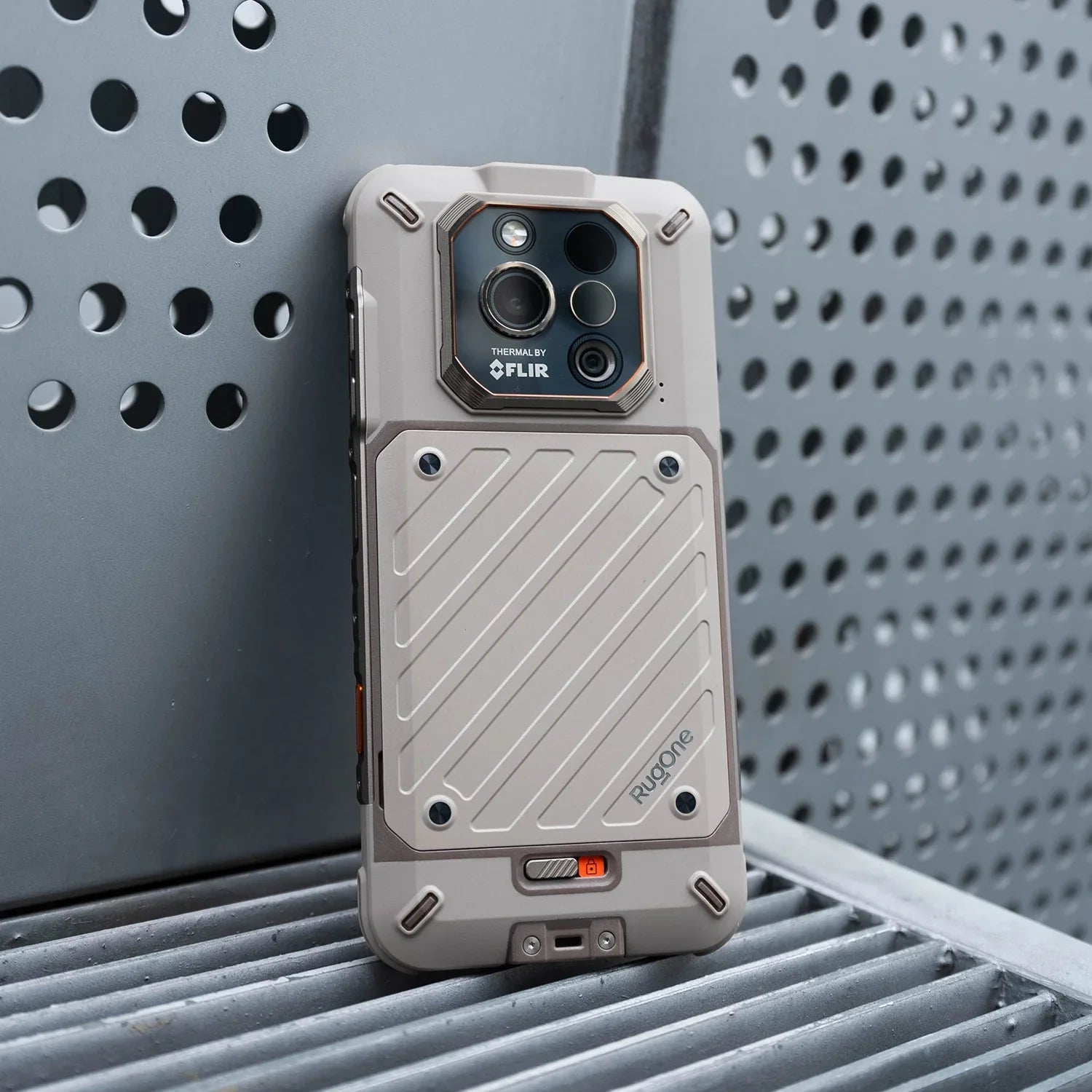


TL;DR: IP67, IP68, and IP69K all claim waterproof protection, but each certifies a different failure mode: IP67 is brief shallow submersion, IP68 is deeper/longer submersion at a depth the manufacturer sets, and IP69K is high-pressure high-temperature jet resistance, not submersion at all. A phone can carry more than one rating at once. RugOne phones carry both IP68 and IP69K — and RugOne's internal IP68 rating test runs 60 minutes, double the 30-minute industry standard, to build in real-world margin for accidents rather than just passing the minimum.
IP67 vs IP68 vs IP69K: What's the Real Difference?
You see IP ratings on rugged phones, action cameras, smartwatches, and outdoor gear — but the numbers rarely get a proper explanation. This guide breaks down exactly what IP67, IP68, and IP69K mean, how each is tested, which one actually protects your device in the real world, and why RugOne pushes its IP68 rating past what the certification alone requires.
What does the "IP" stand for?
IP stands for Ingress Protection. It's a classification system defined by the International Electrotechnical Commission (IEC 60529) that tells you how well a device's enclosure resists solid particles and liquids entering its interior.
Every IP rating follows the same format: IP + two digits. The first digit (0–6) rates protection against solid objects like dust. The second digit (0–9K) rates protection against water. When a digit is replaced by X — like IPX8 — it simply means that axis wasn't tested, not that it failed.
The three ratings at a glance
IP67 — Submersion-resistant, short duration Dust: fully sealed · Depth: up to 1 m · Duration: 30 minutes · Pressure: static (low) · Temp: ambient
IP68 — Submersion-resistant, deeper & longer Dust: fully sealed · Depth: 1 m+ (varies by manufacturer) · Duration: 30 min+ · Pressure: static (low) · Temp: ambient
IP69K — High-pressure jet, industrial grade Dust: fully sealed · Depth: not tested · Duration: 30 sec/angle · Pressure: 80–100 bar · Temp: up to 80°C
IP67 — what it really means
A device with IP67 certification has been tested by submerging it in 1 meter of water for 30 minutes under static, low-pressure conditions. Both digits are at or near their maximum: 6 means no dust can get in, 7 means it survives that specific submersion test.
In everyday terms: IP67 is fine for rain, splashes, brief accidental drops in water, and sweat. It is not designed for swimming, snorkeling, or being left submerged for extended periods.
IP68 — the "gold standard" rating most flagship phones claim
The "8" in an IP68 rating indicates the device has been tested beyond 1 meter of depth for longer than 30 minutes. However — and this is the part manufacturers rarely advertise clearly — the IEC standard doesn't specify what "beyond" means. Each manufacturer sets their own depth and duration for the test, which is why Samsung and Apple both claim IP68 but list different conditions (Samsung at 1.5 m/30 min, Apple at 6 m/30 min for newer Pro models).
What they all have in common: the water pressure is still static and ambient temperature. A standard IP68 rating was designed for clean water submersion, not high-pressure washing or hot water exposure.
Important: IP68 certification uses fresh water in a controlled lab environment. Saltwater, chlorinated pool water, and soapy water are more corrosive and can degrade seals faster — even on a certified IP68 device. Rinse with plain water after ocean or pool exposure.
Why a standard IP68 rating often isn't enough in the real world
For the average office worker, a standard IP68 rating is genuinely sufficient. But for people who work or play outdoors — construction workers, field engineers, delivery riders, hikers, anglers — conditions are harder on a seal than a lab test accounts for:
- Dynamic water pressure: dropping a phone into a rushing river, or using it while kayaking or surfing, creates impact forces far beyond the static pressure of 1.5 meters of still water.
- High-temp steam: in bathrooms, saunas, or hot workshops, heat can age sealing adhesives faster, letting water in on phones that are only rated for ambient-temperature testing.
- Heavy-duty cleaning: after a job site, people often rinse mud off with a hose or pressure washer — well outside what a standard IP68 rating was tested for.
This is the gap between "IP68 is designed for accidents" and "IP69K is designed for work."
IP69K — industrial, not consumer
IP69K originates from the automotive and food processing industries, where equipment must withstand high-pressure steam cleaning. The test shoots water at 80–100 bar of pressure, at temperatures up to 80°C, from multiple angles at close range (10–15 cm).
A device with IP69K cannot necessarily be submerged — the "9K" only means it passed the jet test, not a submersion test. That's why serious rugged phones often carry both IP68 and IP69K ratings. One certifies depth, the other certifies pressure resistance. They test different failure modes.
How RugOne tests its IP68 rating: double the industry's immersion duration
Most flagship phones that advertise an IP68 rating stop their real testing at the certification minimum: 30 minutes. RugOne runs its internal validation at 60 minutes — double the industry standard — at the same 1.5 meter depth, specifically to build in margin for the accidents a lab test doesn't simulate: a phone left in a flooded pocket, a delayed rescue from a river crossing, a longer-than-expected dunking.
| Test item | Ordinary IP68 smartphone (industry standard) | RugOne (internal standard) | Real-world benefit |
|---|---|---|---|
| Immersion time | 30 minutes | 60 minutes (2x duration) | More margin for underwater photography or accidental long-term submersion |
| Immersion depth | 1.5 meters | 1.5 meters (up to 2m on some models) | Handles common water bodies like pools and streams |
| High-pressure jet | Not supported | Supported (IP69K) | Can be cleaned directly with a pressure washer to remove mud and grime |
| High-temp water | Not supported | Supported, up to 80°C | Holds up in saunas, bathrooms, and hot industrial environments |
| Dust rating | IP6X | IP6X, full sealing design | Isolates dust even in flour mills or cement plants |
All waterproof ratings listed in product specifications refer to officially certified test conditions (IEC 60529 / ISO 20653). The extended immersion testing described above reflects RugOne's internal validation process, designed to provide additional reliability margin beyond certification requirements — it is not itself a certification claim.
Full specification comparison
| Test parameter | IP67 | IP68 | IP69K |
|---|---|---|---|
| Standard | IEC 60529 | IEC 60529 | ISO 20653 / IEC 60529 |
| Dust protection | IP6x — fully sealed | IP6x — fully sealed | IP6x — fully sealed |
| Submersion depth | 1 m exactly | Manufacturer-defined (>1 m) | Not a submersion test |
| Test duration | 30 min | 30 min or longer | 30 sec per nozzle angle |
| Water pressure | ~0.1 bar (static) | ~0.1 bar (static) | 80–100 bar |
| Water temperature | Ambient (~20°C) | Ambient (~20°C) | Up to 80°C |
| Flow rate | N/A | N/A | 14–16 L/min |
| Primary use case | Consumer electronics | Consumer / semi-rugged | Industrial / food processing |
| Covers deep diving? | No | No (unless mfr. specifies) | No |
Which rating do you actually need?
Everyday consumer use — rain, splashes, sweaty workouts, accidental drops in the sink or toilet. IP67 or IP68 is more than enough.
Outdoor recreation — kayaking, hiking in rain, beach use. Go for IP68 with a manufacturer-confirmed depth spec of at least 1.5 m. Don't rely on IP67 for water sports.
Construction sites — concrete dust, mud, heavy rain, power washing. You want both IP68 and IP69K: dust sealing plus resistance to water jets from nearby equipment.
Food processing / industrial — high-pressure steam cleaning, chemical exposure, extreme temperatures. IP69K is mandatory; pair with MIL-STD-810 for drop and vibration protection.
The most common misconceptions
Misconception 1: An IP68 rating means you can swim with it. Consumer phones rated IP68 are designed for accidental immersion, not extended water activity. Seals degrade over time, and motion in water increases the effective pressure on them. Most manufacturers explicitly void water damage warranties even on IP68 devices.
Misconception 2: IP69K is "better than" IP68. They measure completely different things. A device rated only IP69K might fail a basic submersion test. You need both ratings if both scenarios apply to your work environment — which is why RugOne certifies for both rather than picking one.
Misconception 3: The IP rating lasts forever. Physical seals degrade with drops, age, heat cycles, and chemical exposure. A cracked chassis or worn port seal voids the practical protection of any IP rating, regardless of what's printed in the spec sheet.
Frequently Asked Questions
Since RugOne phones support IP69K, does that mean I can shower with them? Theoretically, IP69K allows the device to withstand high-temperature water jets up to 80°C. RugOne phones handle hot water splashes well, but we recommend avoiding prolonged exposure to high-temperature steam environments, which can affect surface coatings like the screen's oleophobic layer over time.
Which is better, IP68 or IP69K? Neither — they measure different things. IP68 is about prolonged immersion; IP69K is about high-pressure, high-temperature jet resistance. RugOne phones hold certifications for both, and RugOne's internal IP68 validation runs double the standard test duration for extra margin.
Why does RugOne test for 60 minutes when the certified IP68 rating standard is 30? Because real-world accidents don't stick to lab timing. The extra 30 minutes tests the durability of the sealing materials and the precision of the assembly beyond the certification minimum, so the device holds up even if rescue or retrieval takes longer than expected.
Our verdict
Casual user — a standard IP67 rating is enough. It handles everything most people encounter day-to-day; don't pay extra for IP68 unless you regularly need deeper water exposure.
Outdoor / active — aim for IP68. Better depth and duration specs give you a real safety margin for sports, travel, and unpredictable environments.
Field / industrial — require both ratings. IP68 + IP69K together ensure your device survives both deep submersion and high-pressure washdowns on the job — which is why every RugOne phone is built to both standards, tested well beyond the certification minimum.
See how these standards hold up on a real job site in our guide to the Best Rugged Smartphone for Construction Site Workers.
Explore RugOne's Waterproof Rugged Phones