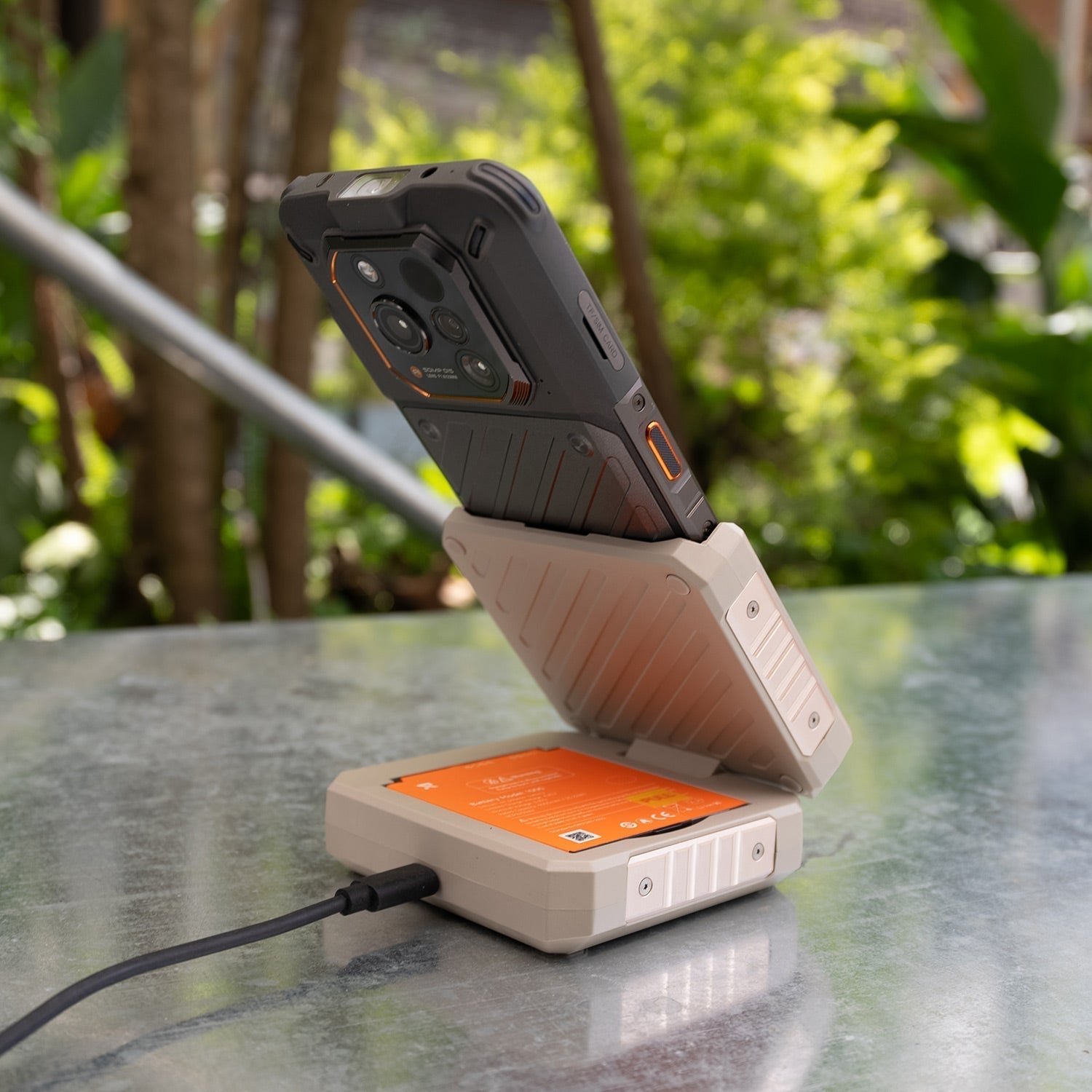


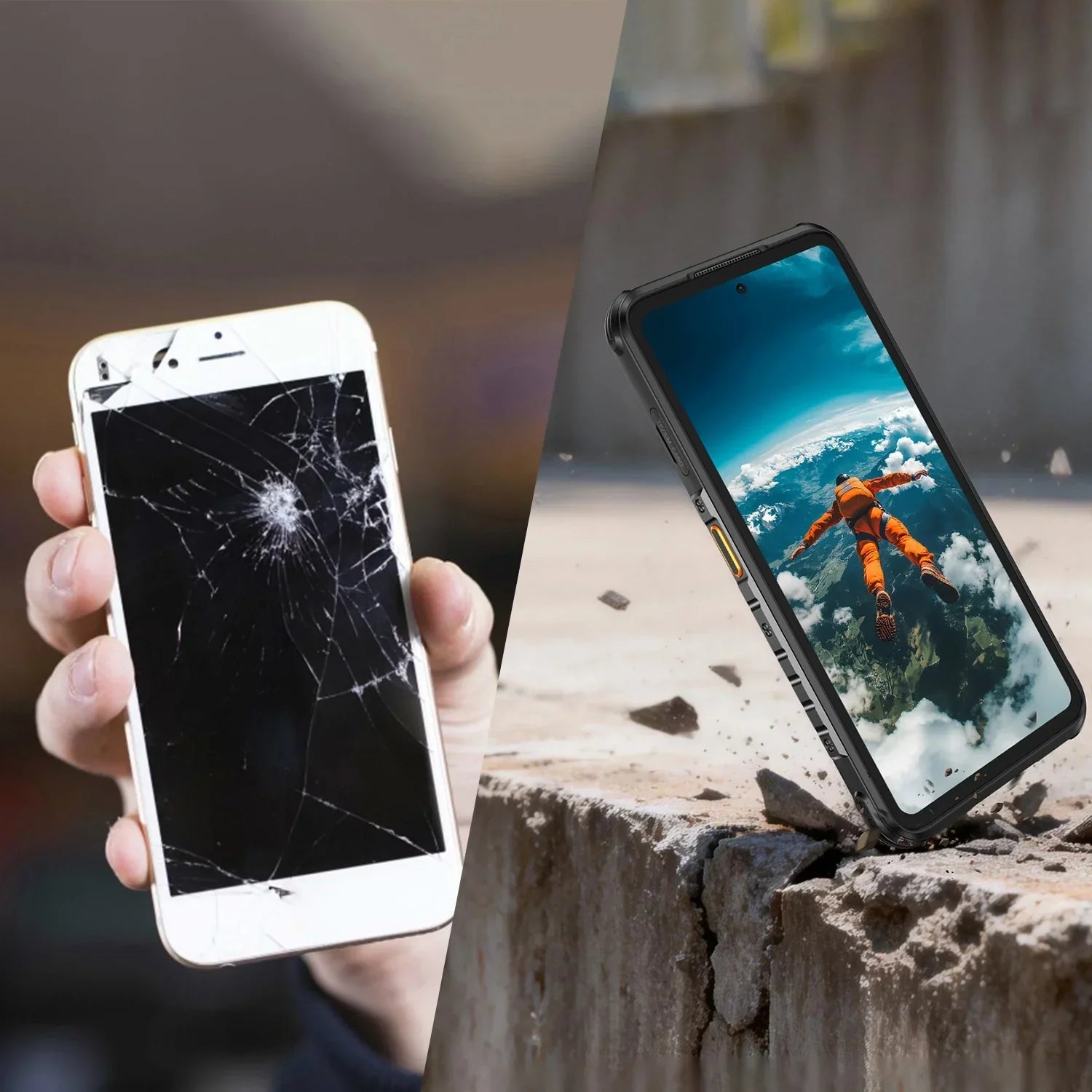
In an era where smartphones are striving to be thinner, lighter, and more screen-focused, one category moves in the opposite direction: Rugged Phones. They are substantial, textured, and built like tanks.
A common question we hear is: “If I just put a heavy-duty case on my standard smartphone, isn't that the same as a rugged phone?”
The answer is no. From the underlying engineering logic to the materials used, Rugged Phones and Regular Smartphones are two completely different species. Today, the RugOne Team breaks down the essential differences based on structural design, environmental adaptability, and real-world scenarios to help you make the right choice.
1. The Design Philosophy: Fundamental Differences
The design priority for a Regular Smartphone is typically: Aesthetics > Performance > Durability.
To achieve a premium feel and visual appeal, modern flagships often use a "Glass Sandwich" structure—glass on the front and back with a narrow metal frame in the middle. This is elegant, but physically fragile.
The design priority for a Rugged Phone is: Survival > Function > Aesthetics.
The core lies in Structural Reinforcement. Rugged phones are designed with an internal "roll cage" concept, often utilizing high-hardness alloy frames wrapped in shock-absorbing TPU (Thermoplastic Polyurethane). Internal components are often secured with structural adhesive and suspended mountings to minimize vibration damage.
In short: A regular phone is a precision sports car, designed for paved tracks. A rugged phone is an off-road vehicle, born for mud, rocks, and impact.
2. Core Comparison: Real-World Engineering Differences
A. Protection Ratings: More Than Just Numbers
While many flagship phones now boast IP68 water resistance, the engineering implementation differs.
-
Regular Phones: Rely on precision assembly and thin adhesive strips. Once the frame suffers even minor deformation (like a small drop), the waterproof seal is often compromised immediately.
-
Rugged Phones: In addition to IP68, we typically engineer for IP69K (protection against high-pressure, high-temperature water jets) and MIL-STD-810H (US Military Standards). We use screws to lock the chassis and employ thick O-rings or waterproof plugs at interfaces. Even after multiple drops, the sealing structure remains intact.
B. Battery Tech & Environmental Stability
This is a critical pain point for outdoor users. Standard lithium batteries lose chemical activity rapidly in temperatures below -10°C (14°F), causing voltage drops and sudden shutdowns.
Rugged Phones often utilize specialized low-temperature electrolytes or Solid-state Battery technology. Combined with massive capacities (often starting at 6000mAh and going up to 20,000mAh), RugOne devices are tested to ensure stable voltage output in freezing -30°C conditions or scorching +55°C heat.
C. Impact Resistance & Stress Release
When a regular phone drops, stress is transferred directly to the glass panel, causing cracks. Rugged phones feature C-Corner Buffer Designs. When dropped, these four reinforced "soft corners" hit the ground first, absorbing the kinetic energy and protecting the motherboard and screen.
3. The Trade-offs: Objective Disadvantages of Rugged Phones
As a transparent brand, RugOne wants to be clear: Rugged Phones are not for everyone. To achieve extreme durability, we make necessary compromises:
-
Weight & Bulk: Physics cannot be cheated. To accommodate large batteries and protective layers, rugged phones usually weigh over 250g and exceed 12mm in thickness. If you wear skinny jeans, this form factor might be noticeable.
-
Performance Tuning: To guarantee thermal stability in a sealed, waterproof environment, processor clock speeds are sometimes tuned more conservatively than in dedicated gaming phones to prevent overheating.
-
Camera Philosophy: While we use high-pixel sensors and often include Night Vision cameras, our focus is on Documentary clarity (capturing the site details) rather than Artistic computation (the "beautification" found in top-tier consumer flagships).
4. The RugOne Approach: Balancing Durability and Experience
We know users don't want to carry a literal brick. At RugOne, we focus on "Ergonomic Ruggedness":
-
Smart Materials: We introduce aerospace-grade magnesium alloys to replace heavy steel components, maintaining strength while reducing weight.
-
Grip Optimization: We texture the side TPU to match the curvature of the human palm, increasing friction to prevent drops while reducing sharp edges.
-
Utility First: We don’t just sell "toughness"; we sell tools. Features like built-in high-lumen camping lights, thermal imaging, or customizable PTT (Push-to-Talk) keys turn the phone into a productivity device.
5. Comparison Table: At a Glance
| Feature | Regular Smartphone | Rugged Phone (e.g., RugOne) |
| Design Core | Slim, Aesthetic, Bezel-less | Protection, Battery, Reliability |
| Materials | Glass + Aluminum/Titanium | TPU + Reinforced Alloy + Polycarbonate |
| Drop Protection | Requires a case; fragile naked | Native Protection (1.5m - 2m drop rated) |
| Waterproofing | IP68 (Static water), seal degrades | IP68/IP69K (Dynamic/Hot water), structural seal |
| Battery Life | 1 Day (3000-5000mAh) | 2-5 Days (6000-20000mAh) |
| Best Environment | Urban, Indoor, Mild Outdoor | Construction, Wilderness, Extreme Cold/Heat |
| Weight | Lightweight (170g - 240g) | Substantial (250g - 500g+) |
6. Conclusion: Who Should Choose a Rugged Phone?
Choosing a phone isn't about buying the "best" specs on paper; it's about buying the right tool for your life.
-
Stick to a Regular Smartphone if: You are an urban commuter, prioritize the lightest possible device, or are a professional mobile photographer/creator.
-
Choose a RugOne Rugged Phone if:
-
You work in trades (Construction, HVAC, Logistics, Mechanics).
-
You are an outdoor enthusiast (Hiking, Camping, Overlanding).
-
You are a "clumsy" user tired of cracked screens and data loss.
-
You need a secondary "backup" phone that can survive in a glovebox for months and still have power.
-
7. FAQ
Q1: Are rugged phones only for construction sites? Will I look weird using one daily?
A: Not at all. With the rise of "Gorpcore" and Techwear fashion, modern rugged phones (like our latest RugOne series) fit perfectly into a utilitarian aesthetic. They make a statement about functionality and preparedness.
Q2: Is the screen on a rugged phone less clear than a normal phone?
A: In the past, yes. However, modern rugged phones now frequently feature 120Hz refresh rates and AMOLED panels. The main difference is that our cover glass is often thicker or comes with a factory-applied hardened protective layer for blast resistance.
Q3: Why can't I just buy a regular phone and a really thick case?
A: This is the most common myth. A case protects against scratches, but it acts as a thermal insulator, trapping heat inside the phone which causes lag. Furthermore, a case does not protect internal components from the G-force of a drop (vibration damage) or the battery from freezing temperatures. A rugged phone is built from the inside out to handle these stresses.
Q4: Can I play games on a Rugged Phone?
A: Yes. Most mid-to-high-end rugged phones have processors capable of smoothly running popular titles like Call of Duty Mobile, Roblox, or Fortnite. While we may not hit the extreme frame rates of dedicated gaming devices, the large battery ensures you can play for hours without looking for a charger.
A Note from RugOne:
If you are ready to stop worrying about your phone and start focusing on your adventure, explore our latest lineup. We don't just provide a phone; we provide peace of mind in the toughest environments.